
Acquisition
Agents find and register qualified leads against the growth layer. The surface replaces the landing page; the agent replaces the ad.
The problem
Product-Led Growth solved the top of the funnel: self-serve sign-up, frictionless onboarding, usage as the qualifying signal. But it created its own constraints. The motions still depend on humans clicking through flows that were designed for humans. The growth surface is bounded by the product's own UI.
Agent-Led Growth opens the growth surface to external autonomous agents operating against a trusted growth layer. Agents are measured on verified outcomes, not impressions or intent signals. They are paid on results, not retainers. The operator doesn't manage the agent. They define the contract and observe the outcomes.
Growth Motions
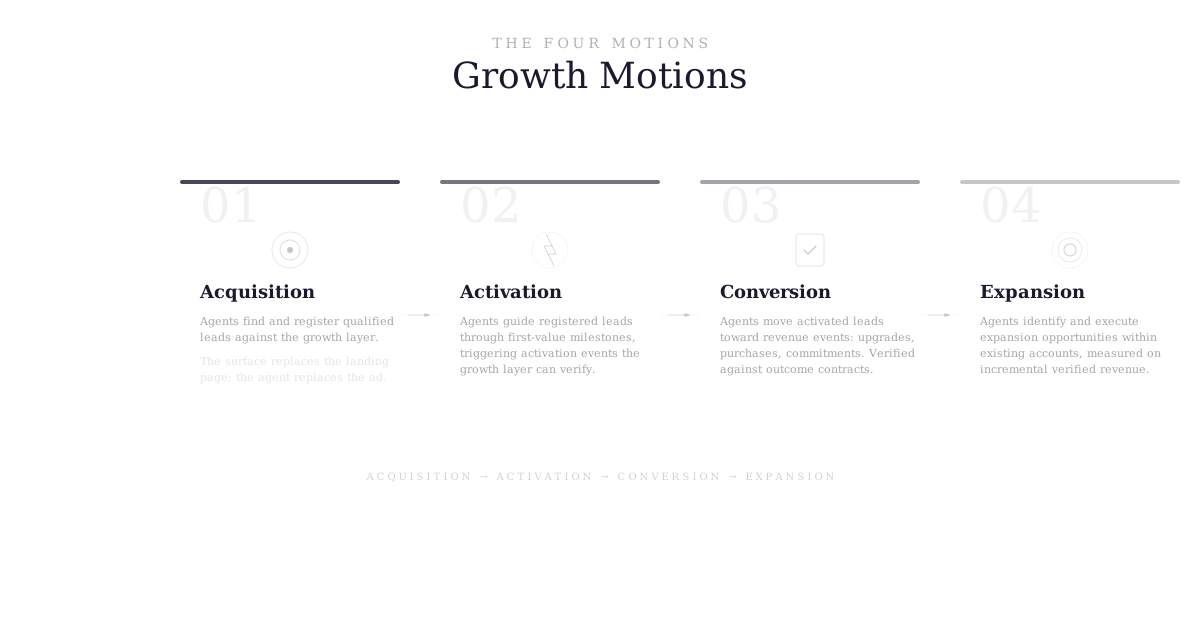
Agents find and register qualified leads against the growth layer. The surface replaces the landing page; the agent replaces the ad.
Agents guide registered leads through first-value milestones, triggering activation events that the growth layer can verify.
Agents move activated leads toward revenue events: upgrades, purchases, commitments. Verified against outcome contracts.
Agents identify and execute expansion opportunities within existing accounts, measured on incremental verified revenue.
Architecture
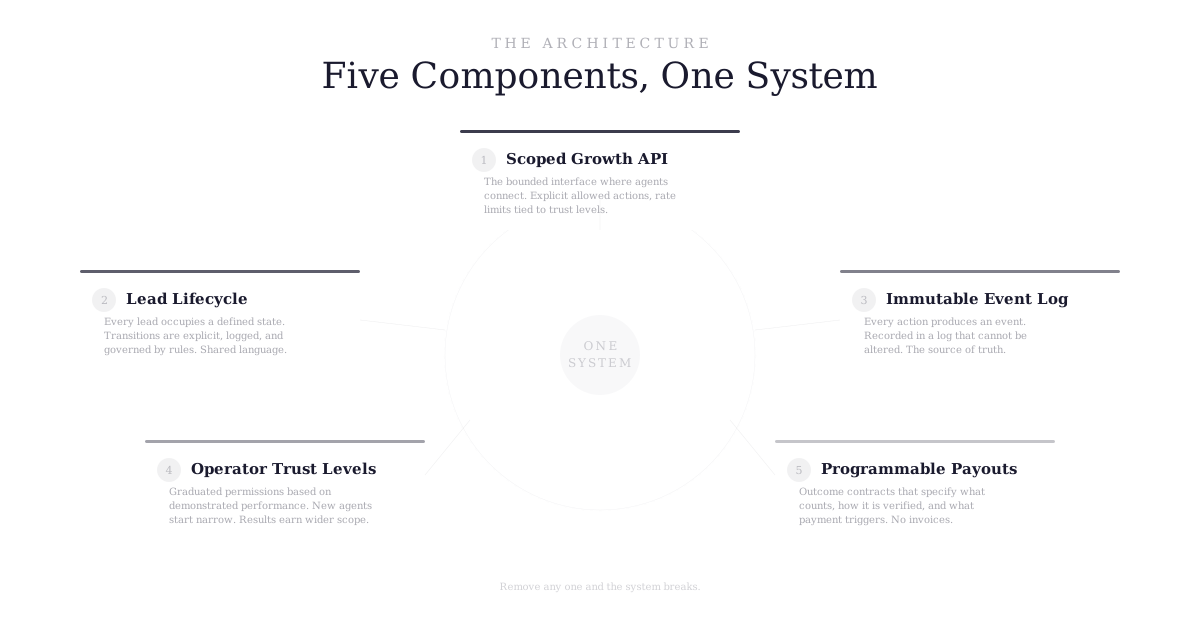
The bounded interface where agents connect. Explicit allowed actions, rate limits tied to trust levels, response schemas that return only what the agent needs. Not a public API. A surgical surface.
Every lead occupies a defined state. Transitions are explicit, logged, and governed by rules. The shared language between you and every external operator.
Every action produces an event. Every event is recorded in a log that cannot be altered. The source of truth. If there is a dispute, the log settles it.
Graduated permissions based on demonstrated performance. New agents start narrow. Verified results earn wider scope, more volume, more action types.
Outcome contracts that specify what counts, how it is verified, and what payment triggers on verification. No invoices. No retainers. Results move money.
The endgame
Each cycle tightens the feedback, reduces the cost per verified outcome, and widens the aperture for what agents can do. The loop does not stop.
Agents produce outcomes
Outcomes generate data
Data improves the surface
Better surfaces attract better agents
The loop compounds
Start accumulating the trust graph before the category names itself. The sandbox is live.
Experimental. Early. Open.